Today, we are in Belfast and we enjoyed a very thought-provoking and interesting, 90 minute, taxi tour through the sectarian neighborhoods of Belfast to learn about the Troubles. And learn we did!
There are many opinions when the Troubles started, but some would say it goes all the way back to 1690 when Protestant Prince William of Orange defeated the Irish King James III. Others say it was the potato famine. But most agree the most recent troubles started in 1969 and ended with the Good Friday Peace Accord of 1998. But the remnants are still very visible and real.
Most of us have heard of the Irish Republican Army (IRA). I grew up thinking they were simply terrorists fighting the British government. But, of course, things are never as simple as we thought they were when we were growing up. The IRA was the paramilitary arm of the Catholic nationalists who wanted an independent Irish state. They saw the British army as occupying their country. But I didn’t know there were similar paramilitary forces of the Protestant, unionist/loyalist people, who wanted Northern Ireland to remain under British rule. So both sides had “armies” and both sides were violent. And to some extent, both sides still lift up the perpetrators of that violence as martyrs and courageous fighters.
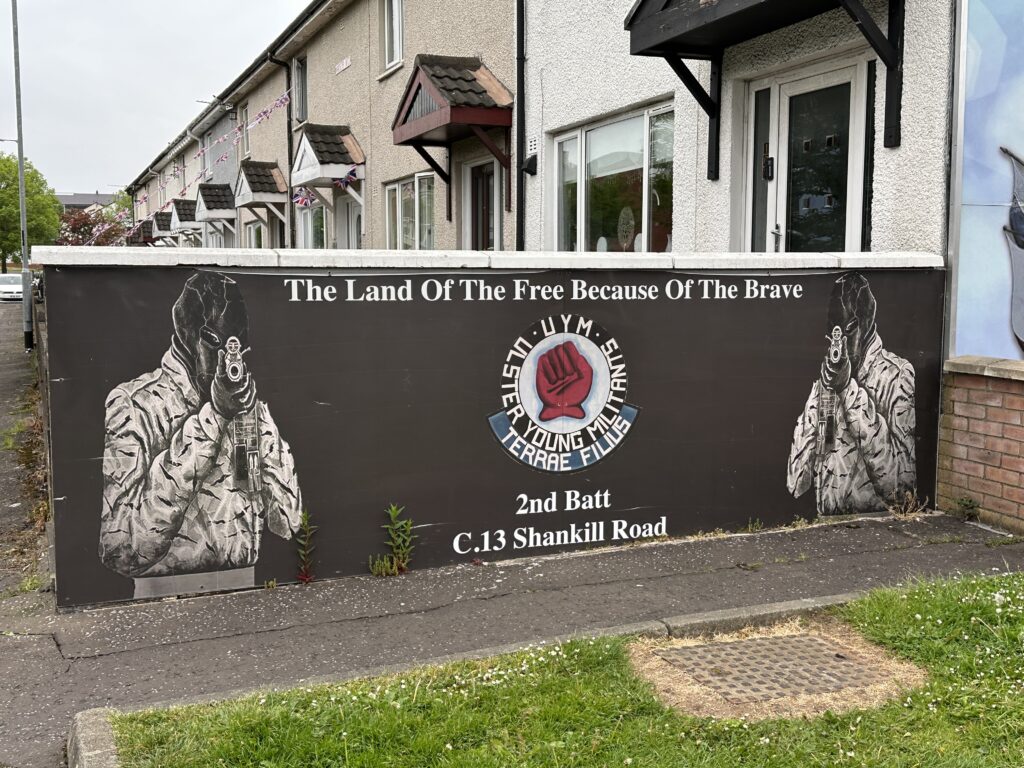
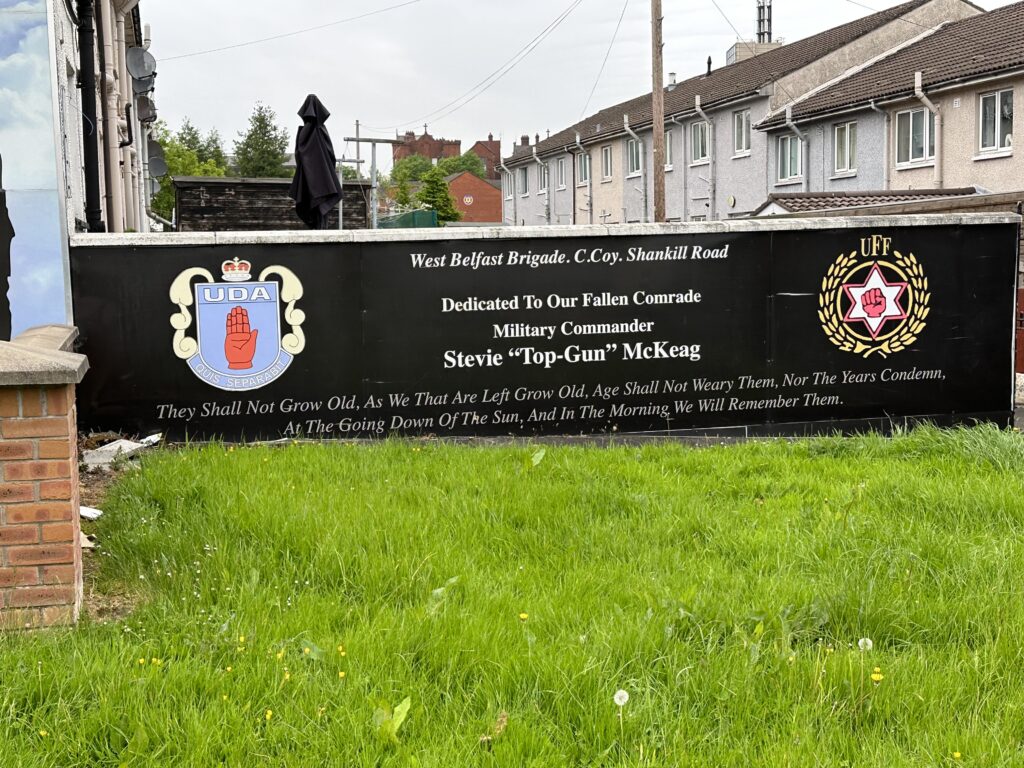
Here are a couple murals from Protestant neighborhoods lifting up men who died in the violence. Frankly, to me, the murals seem to glorify the violence against their neighbors. These murals are just down the block from an elementary school. But don’t get me wrong, there are similar murals and memorials on both the Protestant/Unionist and Catholic/Nationalist sides.
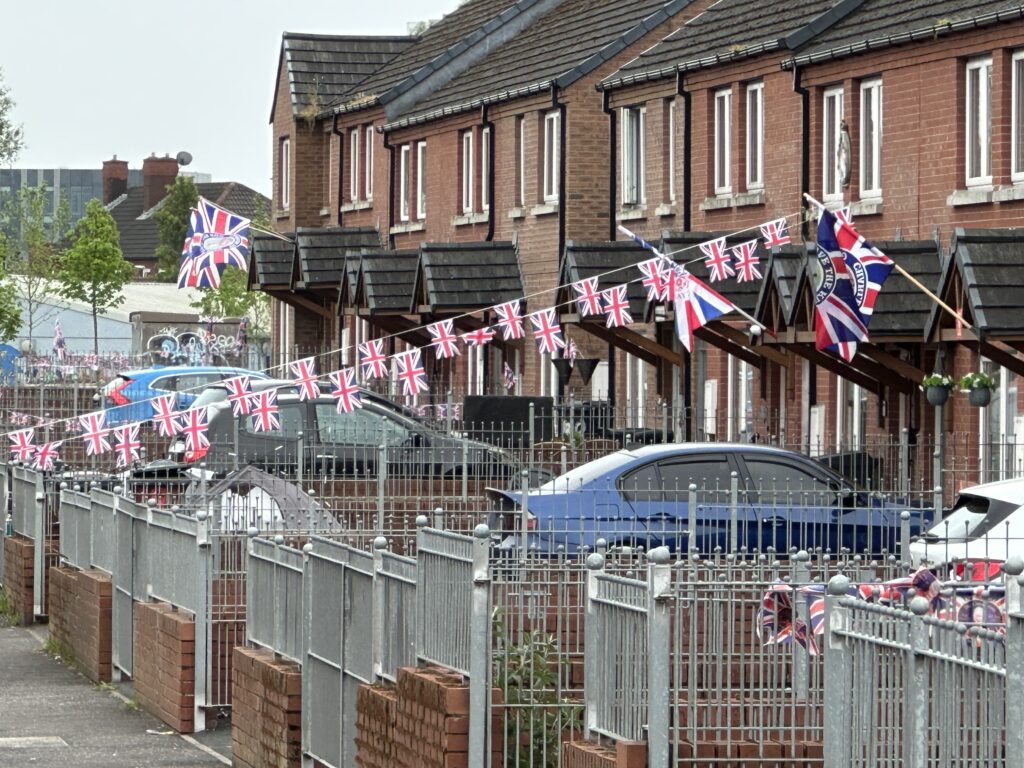
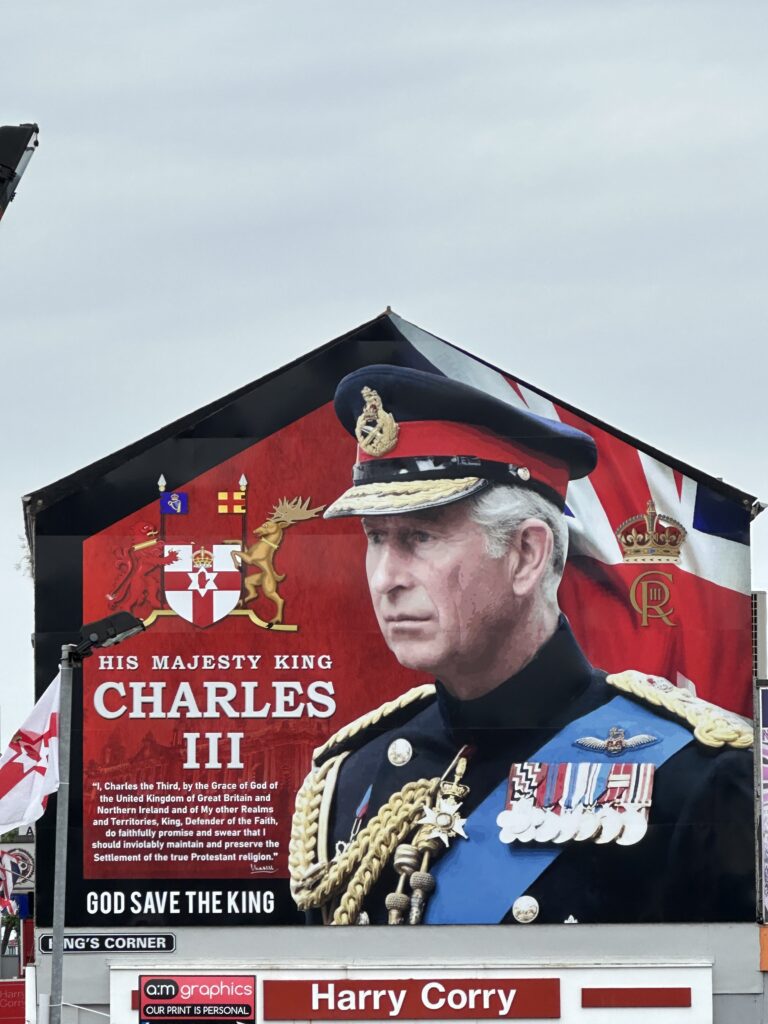
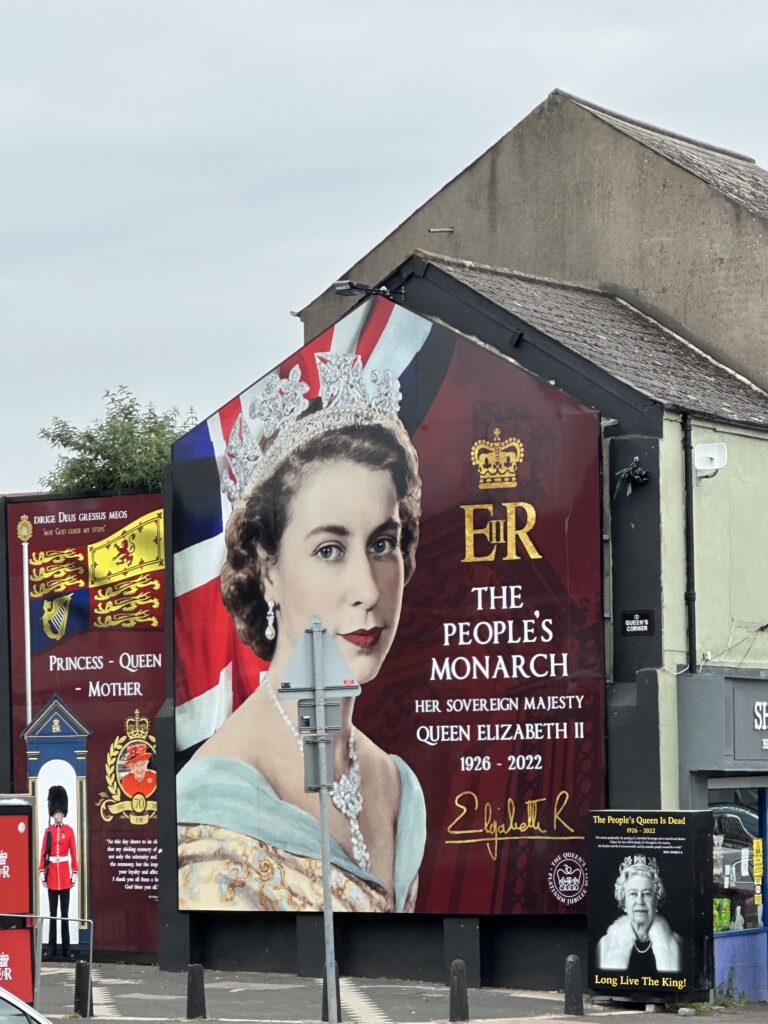
It is said that those in the Protestant neighborhoods are more British than the British. These next photos seem to bear that out. See the British flags lining the streets and the murals of King Charles III and Queen Elizabeth.
Read the small print if you can on the King Charles III mural about defending the “true Protestant religion.” I would prefer it if people did not refer to their religion as the true religion. That just doesn’t seem to build peace, or good relationships.
There is a wall running between the Protestant neighborhood and the Catholic one. It is called the International Wall. The first photo is the beginning of the wall in the Protestant neighborhood. The Protestants side with Israel, note the Star of David. The Catholics side with the Palestinians.

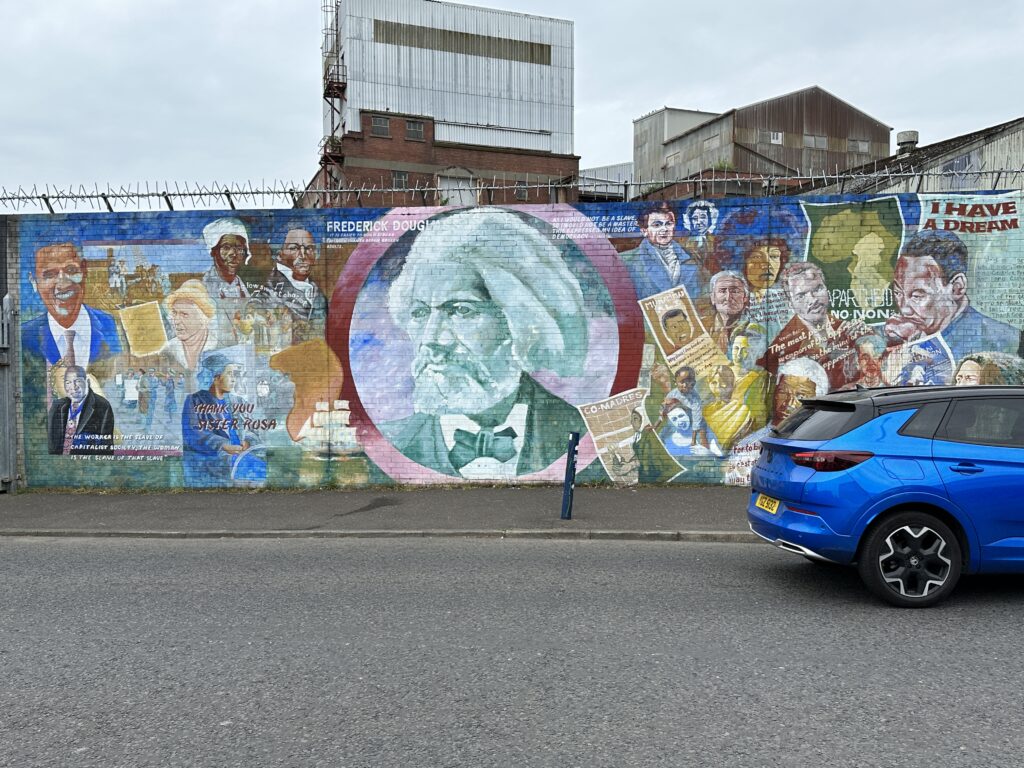
The 1969 Catholic/Nationalist protests were partly inspired by the US civil rights movement. Here is a mural dedicated to some of those civil rights leaders. Can you find Obama? How about Rosa Parks.
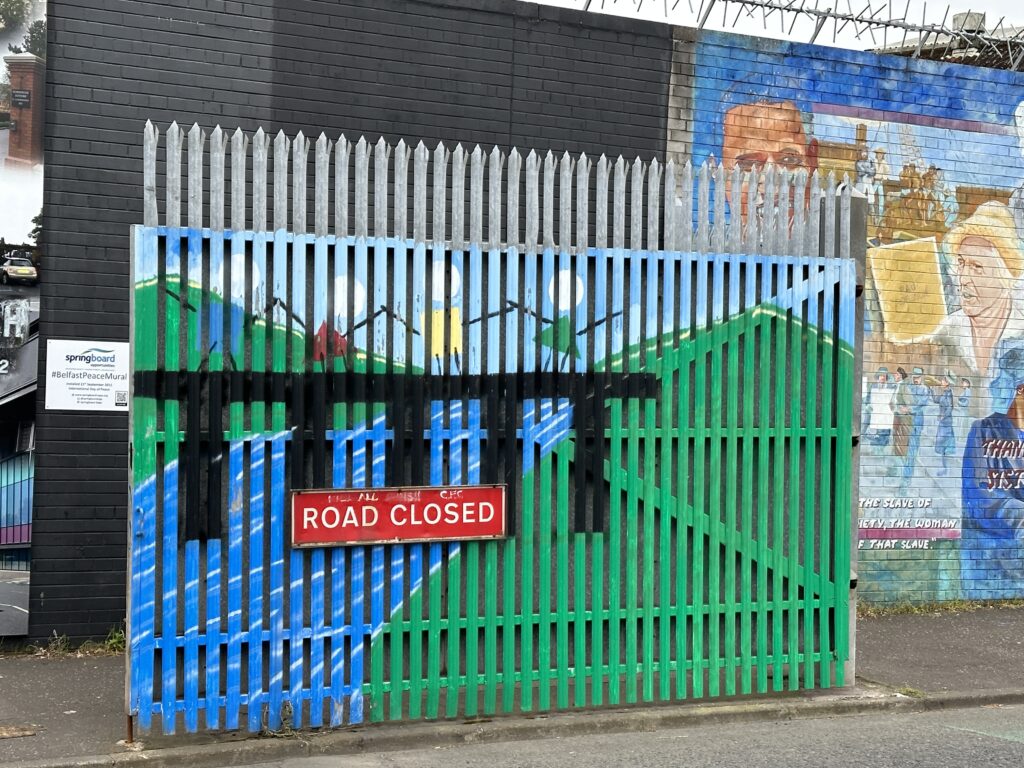
I had no idea there were still gates that were shut between the neighborhoods every evening at 6:30. Here are some of the gates.
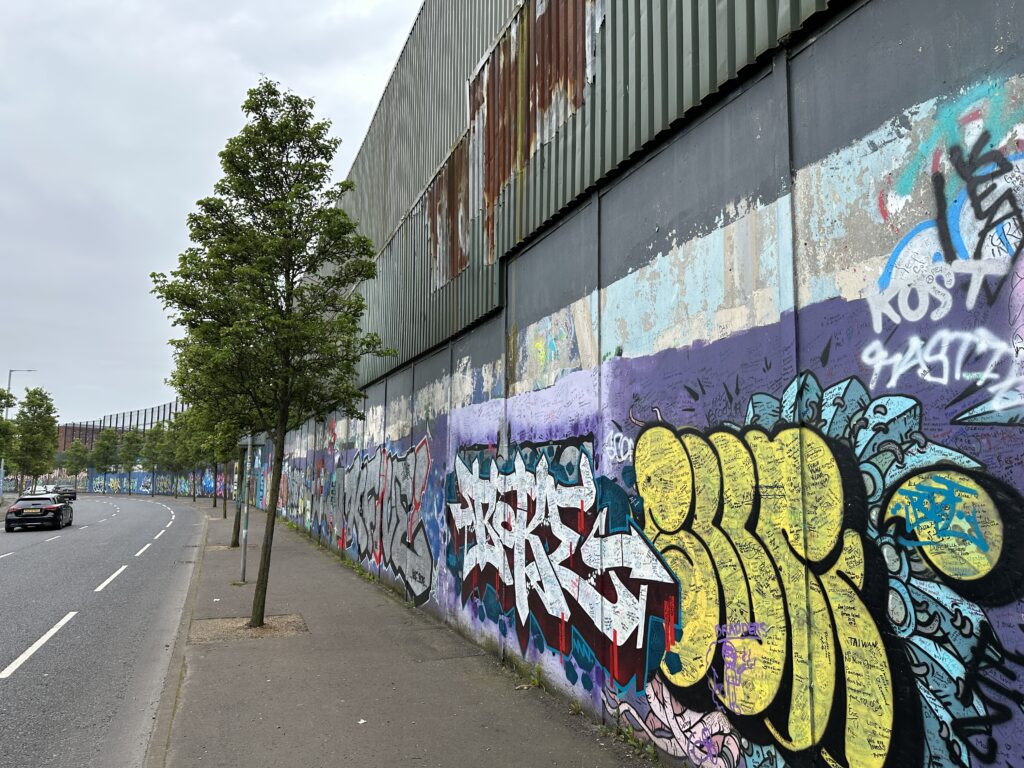
Separate from the International Wall is the Peace Wall (first picture below) which the British built to try to keep the neighborhoods in peace. Notice the rusted spots up high. That is where homemade bombs didn’t make it over the wall and exploded. Our taxi driver explained that everyone wants the walls to come down, wants them dismantled. “But we can’t dismantle the physical walls, until we first dismantle the psychological, emotional, and cultural walls.” That seems pretty profound.
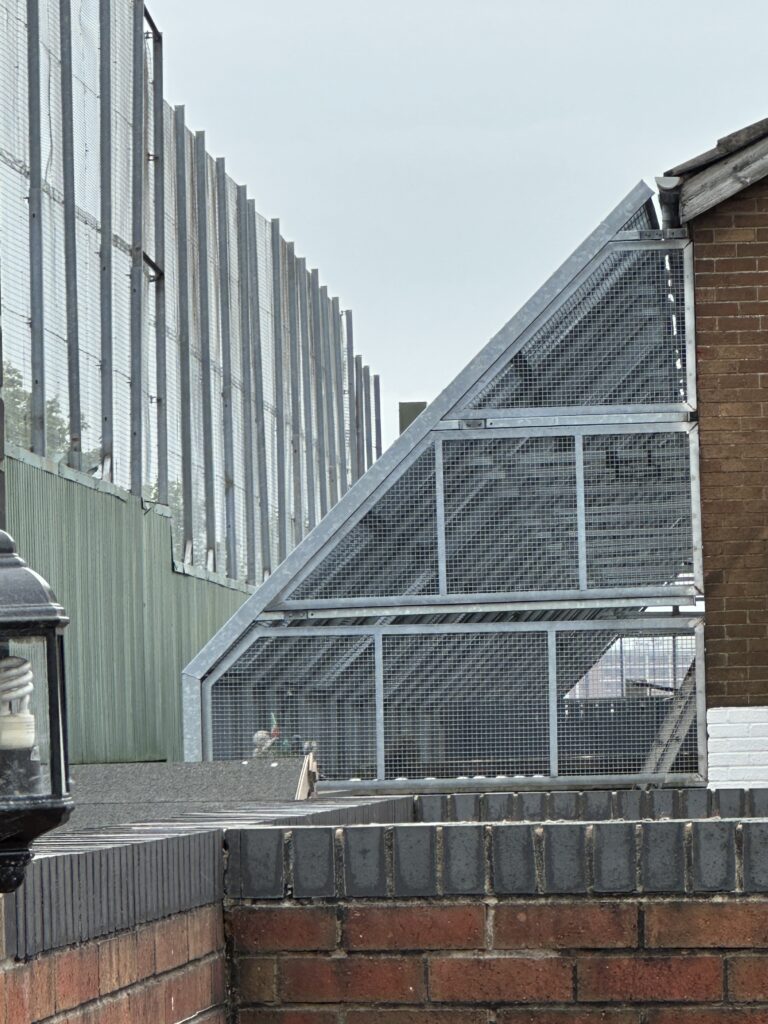
We are now in the Catholic neighborhood looking at houses up against the Peace Wall. They have built cages over their patios and completely surrounding their backyards to protect them from projectiles coming over the wall.
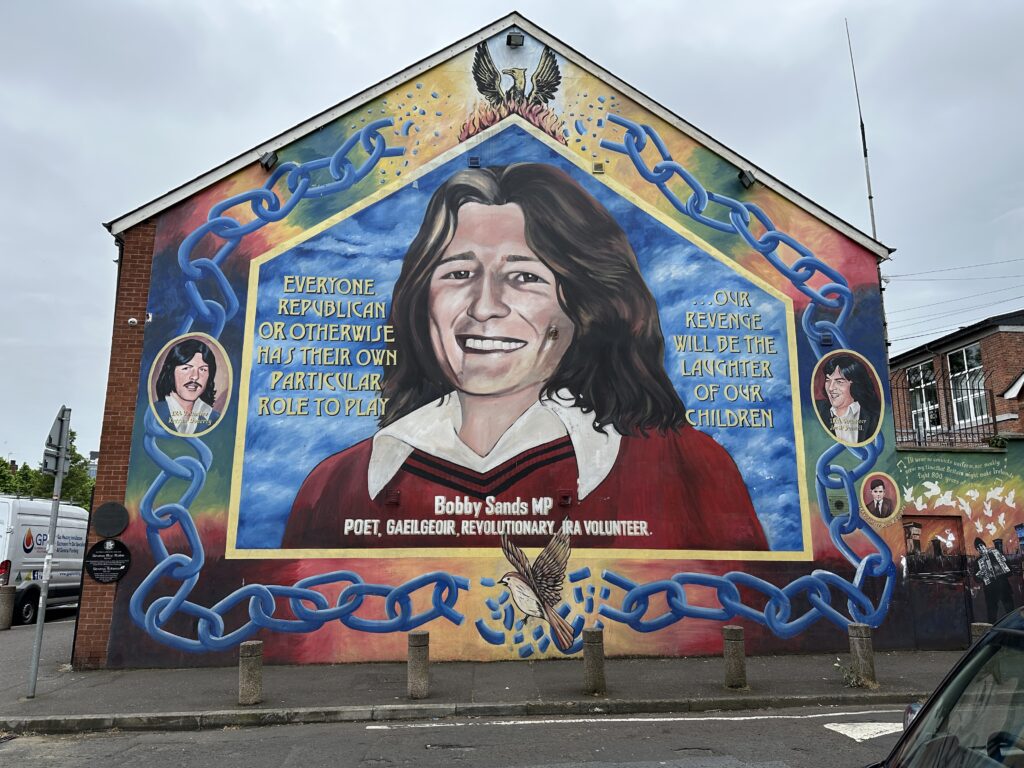
Bobby Sands was an IRA volunteer who was imprisoned. He was elected to Parliament while in prison. The prisons were segregated into three sections: Catholic, Protestant, and common criminals. The Catholic and Protestant prisoners saw themselves as political prisoners and would not allow the criminals to be housed with them. The Catholic and Protestants did not wear prison uniforms. When the British government tried to force the Catholic prisoners to wear prison uniforms, the Catholics started a hunger strike. Eventually, 10 Catholic prisoners, Bobby Sands among them, died from the hunger strike.
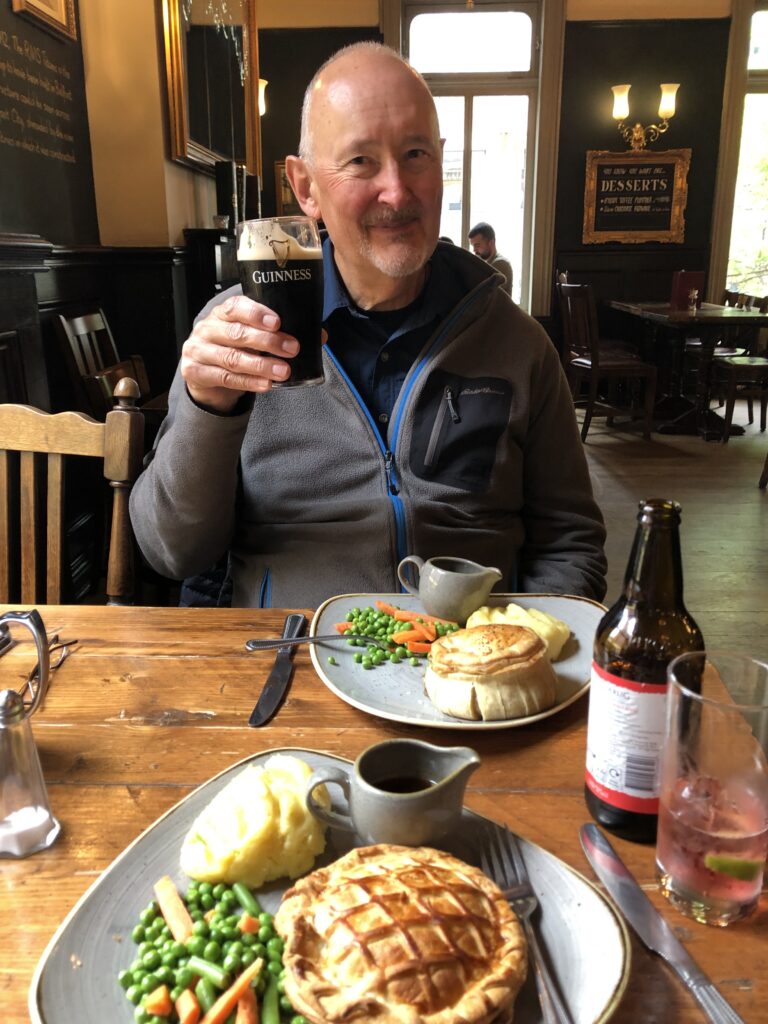
Wow, that was all pretty heavy. It’s time for lunch and what’s for lunch? Well it is Ireland.
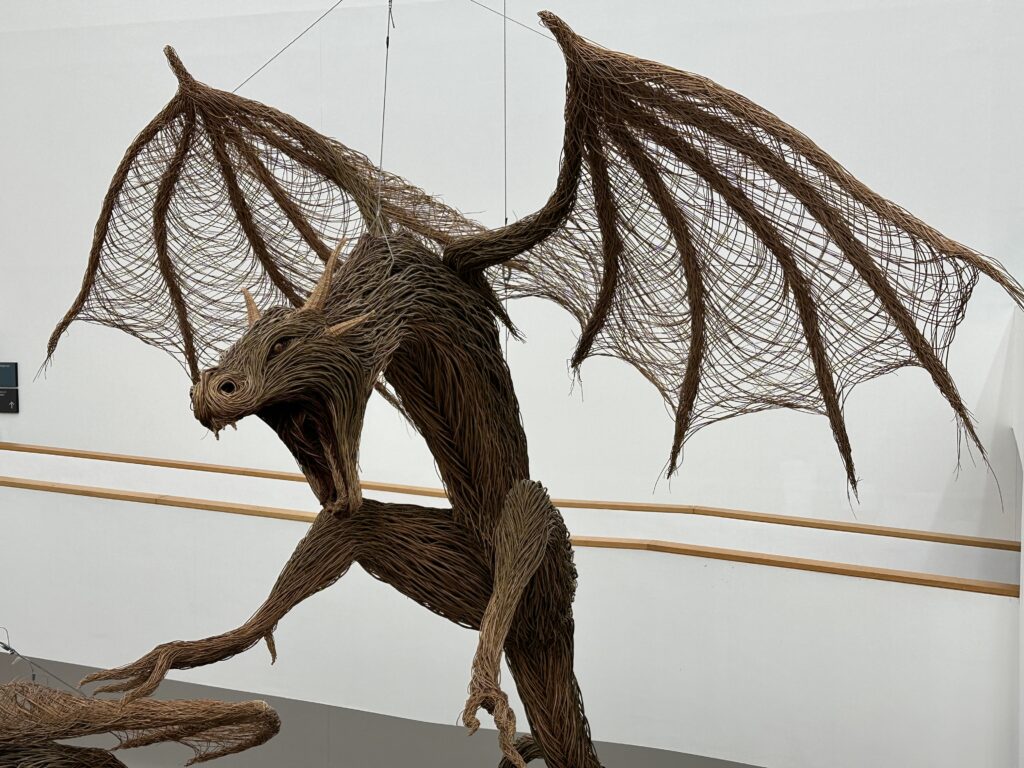
These guys were woven like baskets and were part of the props for the Game of Thrones TV show which was mostly filmed in Northern Ireland.
A very interesting first day. It seems to me there is a lot Americans can learn and consider from Ireland’s experience.
God bless you all,
Coe


Wow, Coe!
What a history lesson! And so profound on so many levels. We are truly human beings with our disagreements, errors, beliefs, etc. – no matter what country we are in. God love us all! =)
I have so enjoyed your posts and so appreciate the time, thought and vulnerability you share with us. Many thanks to you!
Our prayers are with you both!
Bob and Sue
Oh my, what a story. I think you could spend months there learning about the history of these people. Sad about the cages around their homes.
Lunch looks yummy 😋
Interesting history sounds all too familiar. The most distressing part is how much of the divisions have their roots squarely in the church.
Thank you for sharing this information with all of us. Going to war over religion is so wrong in all aspects. Sadly, it is as old as recorded time and continues today. Live and let live. ☮️
Thanks for sharing this information. Wars fought over any type of religion are so wrong on so many levels. And, still, it continues today. Live and let live. ☮️
Thank you. Quite interesting.
Wow. Thank you for the history lesson. Very interesting indeed. God bless. Penny